
The Comprehensive Guide to Preventing Pickleball Elbow: Biomechanics, Equipment Optimization, and Evidence-Based Rehabilitation
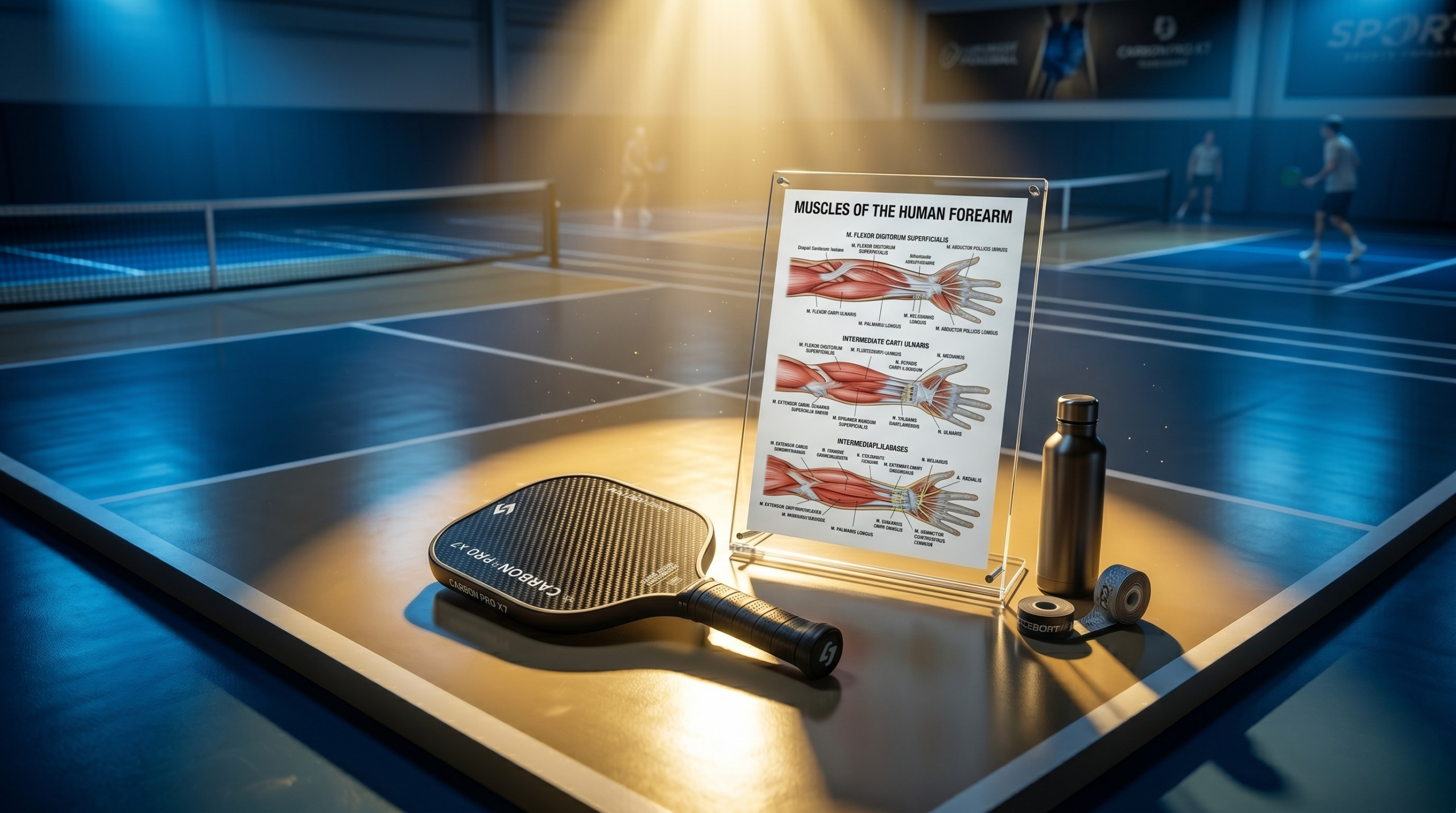
Introduction: The Epidemiological Landscape and Economic Impact of Pickleball Injuries
The rapid and unprecedented proliferation of pickleball has fundamentally transformed the recreational sports landscape, merging the kinetic elements of tennis, badminton, and table tennis into a highly accessible athletic pursuit. Between the years 2021 and 2023, the number of active pickleball players in the United States experienced a dramatic surge, escalating from 4.8 million to an estimated 8.9 million individuals. The Sports and Fitness Industry Association has documented an 11.5% average annual growth rate in pickleball participation over the past five years. This exponential expansion has solidified the game’s status as the fastest-growing sport in the nation; however, it has simultaneously precipitated a corresponding and severe public health challenge: a significant, quantifiable rise in orthopedic injuries, particularly overuse syndromes and acute structural failures.
National estimates drawn from the Consumer Product Safety Commission’s National Electronic Injury Surveillance System (NEISS) database provide a stark quantification of this trend. Data indicates that emergency department visits related to pickleball escalated from approximately 1,313 in 2014 to an alarming 24,461 by the year 2023. A comprehensive retrospective epidemiological analysis spanning the decade between 2013 and 2022 identified a national estimate of 77,963 injuries resulting directly from pickleball participation. This 10-year study observed an 88% increase in injury rates occurring immediately following 2020, closely mirroring the surge in Google search volume for the sport during and after the COVID-19 pandemic.
Despite its pervasive reputation as a low-impact activity suitable for casual engagement, the biomechanical demands of pickleball present profound physiological risks, particularly for the sport’s core demographic. Epidemiological data reveals that a staggering 90% to 91% of all reported pickleball-related injuries occur in individuals aged 50 and older, with the highest concentration of severe injuries appearing in the 60 to 69 age bracket. The American Academy of Orthopaedic Surgeons (AAOS) presented findings at their 2024 Annual Meeting indicating a 90-fold increase in pickleball-related fractures over the past twenty years, with bone fractures increasing by 200% overall. Osteoporosis and naturally diminished bone mineral density significantly elevate the risk profile for older players, who account for the majority of these fractures, 92% of which are sustained during falls on the court.
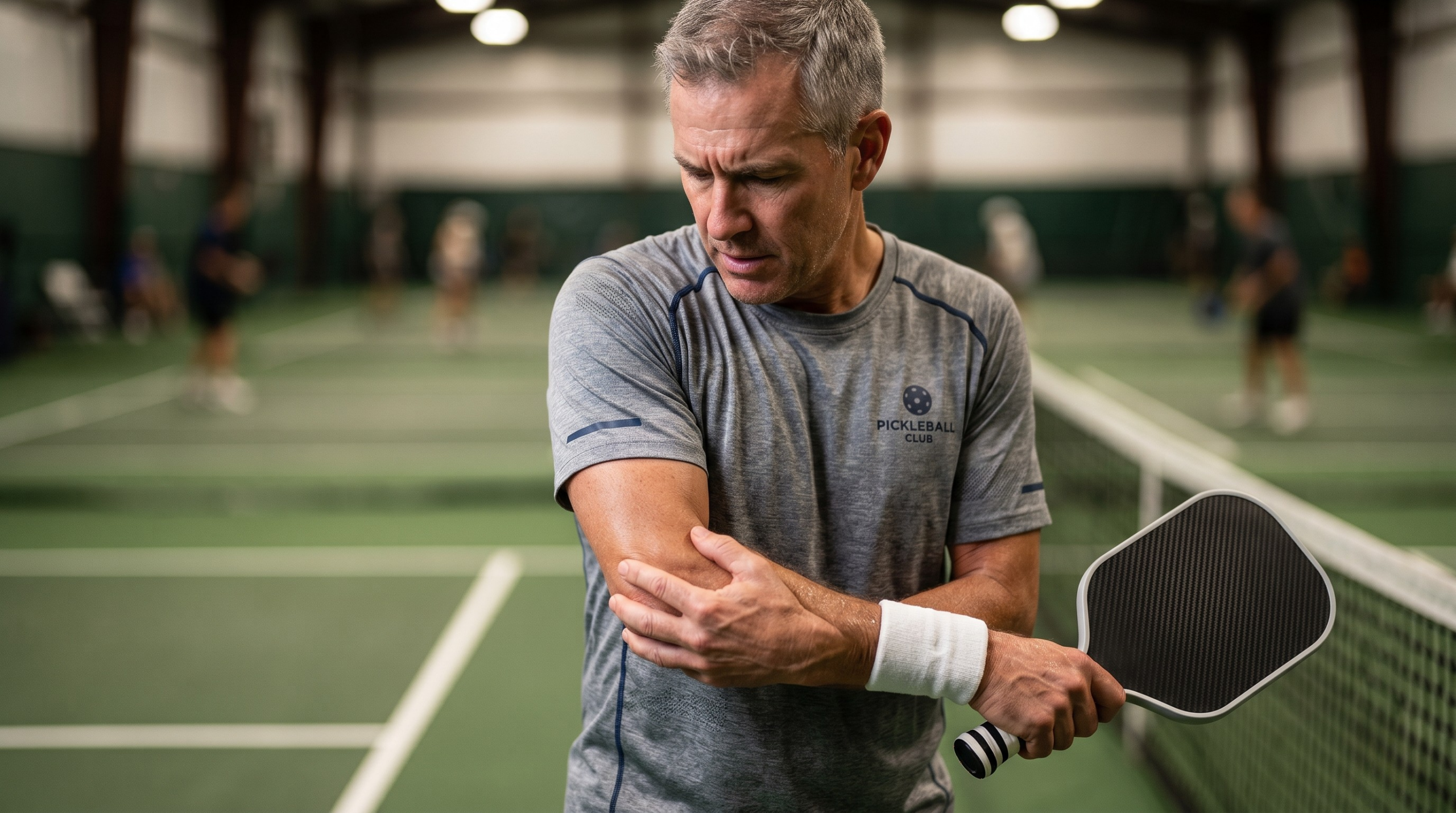
While acute injuries such as ankle sprains, meniscus tears, and hip fractures dominate emergency department statistics, outpatient clinical data reveals an epidemic of chronic, repetitive strain injuries. Localized clinical reports from major sports medicine networks, including Foothills Sports Medicine Physical Therapy in the Phoenix metropolitan area, estimate that the sport now generates upwards of 19,000 localized injuries annually. Among the most pervasive, debilitating, and clinically prevalent conditions to emerge from this athletic phenomenon is lateral epicondylitis, colloquially categorized within the medical community and player base as “pickleball elbow”.
Closely related to tennis elbow and golfer’s elbow in its pathophysiological origin, pickleball elbow arises from the repetitive mechanical loading of the forearm extensors. This condition is exacerbated by a confluence of variables: age-related tendon degeneration, suboptimal equipment utilization, extended volumes of play, and fundamentally flawed stroke mechanics. A 2023 survey of recreational players reported that 28% of participants had sustained at least one overuse injury, with tennis elbow standing as the most frequently cited chronic issue. Furthermore, a nationwide clinical screening study documented an 18.4% 12-month prevalence of elbow injury complaints among active participants.
This report provides an exhaustive, highly detailed, and evidence-based analysis of lateral epicondylitis within the specific biomechanical context of pickleball. By systematically examining the underlying anatomical pathophysiology, evaluating precise equipment modifications—such as paddle core thickness, advanced face materials, structural vibration dampening, and grip sizing methodologies—and outlining clinical rehabilitation protocols, this analysis delivers comprehensive, actionable strategies for the prevention and long-term management of pickleball elbow.
The Pathophysiology and Biomechanics of Lateral Epicondylitis
To construct an effective clinical framework for preventing pickleball elbow, it is imperative to deeply understand the physiological and mechanical mechanisms that drive its onset. Lateral epicondylitis is formally classified as an overuse tendinopathy. It is characterized by localized inflammation, cellular degeneration, and the formation of microscopic tears (micro-evulsions) within the common extensor tendon at its precise point of origin on the lateral epicondyle, which is the prominent bony protuberance on the lateral (outer) aspect of the distal humerus.
The primary muscular structure implicated in this pathological cascade is the extensor carpi radialis brevis (ECRB). The ECRB, along with the broader extensor musculature of the forearm, is biologically tasked with extending the wrist (bending the hand backward) and stabilizing the metacarpophalangeal joints of the fingers during gripping maneuvers.
The Mechanism of Chronic Overuse in Racquet Sports
In the environment of a pickleball match, the ECRB and its surrounding synergist muscles are subjected to continuous, repetitive, and often violent mechanical strain. Each time a player strikes the perforated plastic ball—particularly during forceful backhand groundstrokes, rapid volleys at the non-volley zone, and high-velocity overhead smashes—the extensor muscles must contract instantaneously to transfer force from the body into the paddle, while simultaneously stabilizing the wrist against the concussive impact of the ball.
Over the duration of a match, and exacerbated across multiple sessions per week, this mechanical load consistently exceeds the tendon’s physiological capacity to synthesize new collagen and heal. This creates a negative regenerative balance. The micro-tears compound, initiating an inflammatory cascade that results in the hallmark symptoms of the condition: acute tenderness focused on the lateral epicondyle, stiffness when attempting to extend the forearm in the morning, a burning sensation along the outer elbow, and a profound, measurable weakness in grip strength that can make mundane activities, such as turning a doorknob or opening a jar, excruciatingly painful.
The demographic composition of the pickleball player base heavily influences the high prevalence of this specific injury. Cellular regeneration rates and inherent tendon elasticity naturally and predictably decrease with advancing age. Research published in the British Journal of Sports Medicine highlights that older connective tissues require significantly extended recovery periods to repair the identical mechanical loads tolerated effortlessly by younger tissues. Consequently, when older athletes engage in the sport multiple times per week—often playing four to six days consecutively without structured rest—the cumulative stress rapidly outpaces cellular repair, leading directly to structural failure and clinical tendinopathy.
Biomechanical Catalysts Unique to the Pickleball Court
While tennis and squash present similar risks, the specific structural realities of pickleball create unique biomechanical hazards that differentiate it from its racquet sport predecessors. The court is significantly smaller, the paddle is shorter and lighter, and the ball possesses drastically different aerodynamic and impact properties. This environment often leads players to operate under the false, dangerous assumption that full-body kinetics and proper footwork are unnecessary, resulting in several distinct, chronic mechanical failures.
The most prominent and destructive biomechanical driver of lateral epicondylitis in pickleball is excessive grip pressure, colloquially termed the “Death Grip”. Maintaining a maximal or near-maximal grip on the paddle continuously engages the forearm extensor muscles, locking them into a state of high isometric tension. This sustained muscular contraction severely limits localized vascular blood flow, starving the tissue of oxygen and nutrients while simultaneously amplifying the kinetic shockwaves transferred up the paddle shaft and directly into the lateral epicondyle upon every single ball impact. Self-reported injury surveys clearly associate a tight baseline grip with a significantly higher risk of upper extremity injury.
A secondary catalyst is arm-dominant swinging. Optimal power generation in any striking sport requires the utilization of a kinetic chain—transferring energy from the ground, up through the legs, stabilizing in the hips and core, rotating through the torso, and finally delivering that force through the shoulder and arm. Because the pickleball paddle is exceedingly light, many players attempt to “muscle” or drive the ball using only their shoulder and elbow, abandoning core rotation entirely. This forces the relatively small extensor muscles of the forearm to absorb, stabilize, and generate forces they are simply not biologically engineered to handle.
Furthermore, the tactical nature of the game introduces unique repetitive stress patterns not found in tennis. Repetitive dinking—a strategy involving continuous, soft, arcing shots over the net from the non-volley zone line—requires constant, micro-stabilization of the wrist. While dinking is a low-power maneuver, it is a high-volume activity. Extended dink rallies require the wrist to remain fixed in slight extension, placing the ECRB under constant tension. When combined with “late contact”—where a player strikes the ball behind their optimal focal plane, forcing the wrist backward—the extensors must aggressively contract to brake the paddle’s momentum. This repeated eccentric braking load is the precise mechanism that induces tendon strain and subsequent micro-tearing.
Equipment Optimization: The First Line of Defense
For players seeking comprehensive pickleball elbow treatment and prevention guides, proper equipment selection is not merely a matter of performance enhancement; it is a critical, medically necessary orthotic intervention. Modifying the physical properties of the paddle and the grip interface can significantly alter the frequency, amplitude, and duration of the shockwaves transmitted to the vulnerable elbow joint.
Precision Grip Sizing and Anatomical Measurement
Grip size is arguably the most consequential, yet frequently overlooked, variable in the prevention of lateral epicondylitis. A grip that is improperly sized forces the hand into biomechanically inefficient positions, leading to rapid muscle fatigue, compromised control, and chronic overloading of the tendon insertion points. The vast majority of adult pickleball paddles feature standard grip circumferences ranging between 4.0 inches and 4.5 inches, though some stretch toward 5.0 inches.
The biomechanical consequences of incorrect sizing are profound. If a grip is too small or too thin, the player is forced to squeeze the handle excessively to prevent the paddle from twisting or slipping upon impact. This dynamic is directly analogous to the physiological difference between gripping a narrow pen versus a wide water bottle; the narrower object requires significantly more muscular tension across the entire hand and forearm to maintain stability. Over the course of a two-hour match, this constant, high-tension squeezing translates directly to severe extensor strain. Conversely, a grip that is too thick restricts the natural anatomical snap of the wrist, forcing the player to compensate by rigidly locking the elbow and initiating swing power exclusively from the shoulder joint.
To determine the optimal grip size, sports medicine professionals and biomechanical experts recommend two primary methodologies for accurate anatomical measurement:
| Measurement Method | Execution Protocol | Clinical Reliability |
|---|---|---|
| The Ruler Method | With the dominant hand open and fingers extended straight, locate the bottom lateral crease (the middle crease) running horizontally across the palm. Place a standard ruler at this crease and measure vertically to the exact tip of the ring finger. The resulting measurement in inches directly corresponds to the ideal grip circumference. | Highly Accurate. This provides an objective, quantifiable metric and is the recommended standard for purchasing equipment online or customizing grips. |
| The Index Finger Test | The player grasps the paddle handle using a standard continental (handshake) grip. The index finger of the non-dominant hand is then inserted into the gap that forms between the fingertips and the heel of the palm holding the paddle. | Subjective but useful for rapid field testing. If the finger fits snugly without forcing, the grip is appropriate. If there is no room, the grip is too small; if there is excess space, the grip is too large. |
When a player’s measurement falls exactly between two standard manufactured sizes, clinical consensus uniformly advises selecting the smaller size. A grip can easily be incrementally expanded by applying specialized overgrips, whereas a handle that is fundamentally too thick cannot easily be reduced without structural modification to the paddle core.
Paddle Core Thickness: The Physics of Shock Absorption
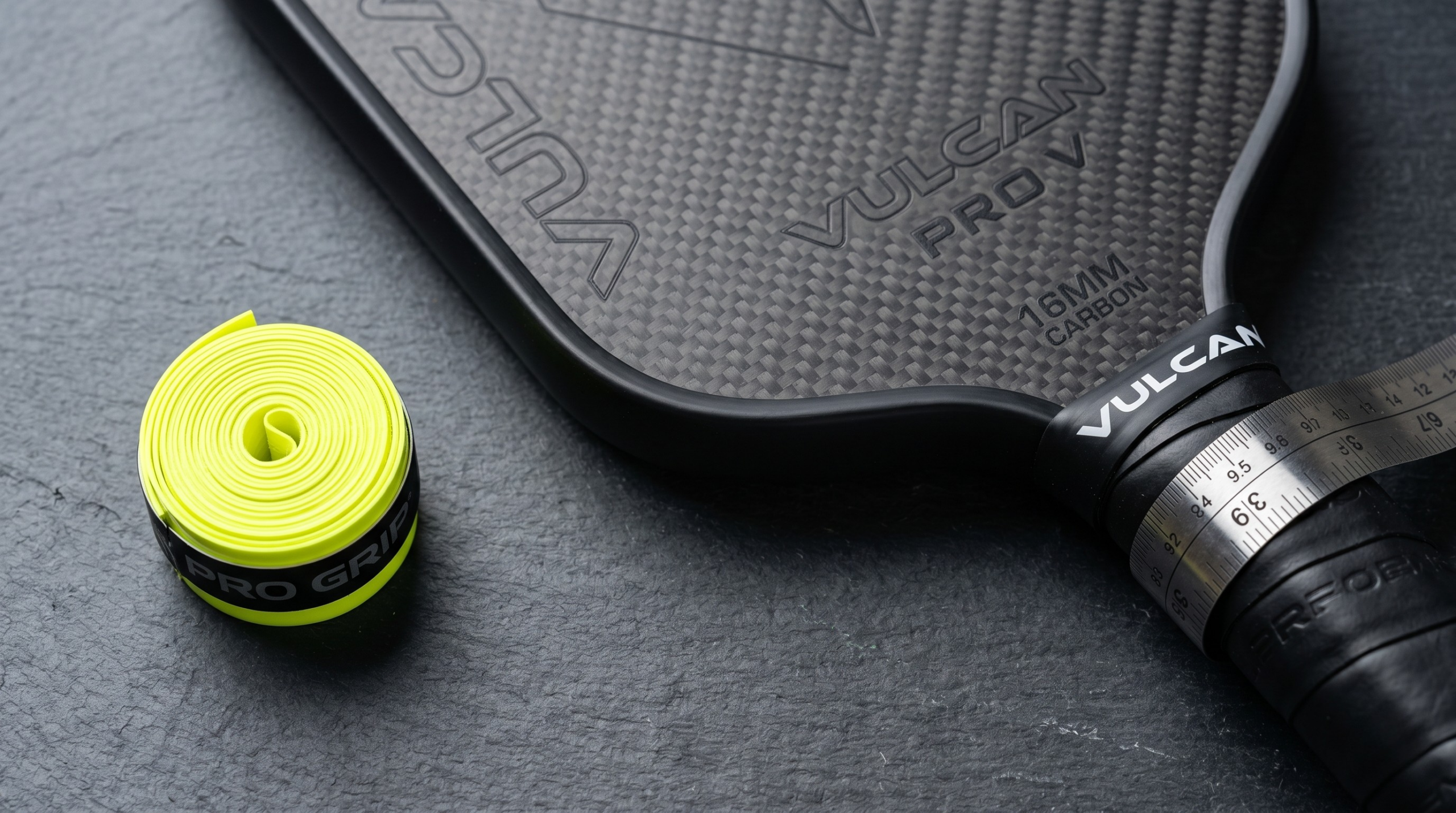
The internal structural architecture of a pickleball paddle dictates its ability to absorb the kinetic energy of an incoming ball. Core thickness, generally constructed from polymer, foam, or polypropylene honeycomb materials, typically ranges from 11mm to 19mm, with 13mm and 16mm representing the predominant industry standards.
For the prevention and clinical management of tennis elbow, a thicker core—measuring 16mm or greater—is universally recommended by sports medicine specialists and equipment engineers. The physics governing this recommendation are straightforward: thicker paddles possess more structural material to compress upon impact. This increased compressibility allows the core to absorb a significantly greater percentage of the ball’s kinetic energy, expanding the paddle’s “sweet spot” and providing unmatched stability. This shock absorption directly and dramatically reduces the vibrational amplitude that travels down the paddle shaft, through the handle, and into the extensor tendons of the wrist and elbow.
While a thinner 13mm core provides a higher coefficient of restitution—resulting in less energy absorption, a faster rebound, and significantly more “pop” and raw power—it acts as a rigid conduit, transferring massive amounts of high-frequency vibration directly to the user’s arm. Therefore, players prioritizing joint health must actively avoid paddles under 14mm in thickness.
Face Material Composition and Dwell Time
The external facing of the paddle interacts directly with the ball, influencing surface friction, dwell time (the microscopic duration the ball remains in contact with the paddle face), and the ultimate harshness of the impact. The rapid evolution of paddle materials has introduced several highly engineered options, each possessing distinct vibration-dampening profiles that directly impact lateral epicondylitis risk:
| Surface Material | Performance Characteristics and Composition | Impact on Lateral Epicondylitis and Joint Strain |
|---|---|---|
| Fiberglass | Created by melting silica sand, limestone, and clay, then coating the filaments in resin. Offers maximum power and flexibility, generating a pronounced “pop” and a massive sweet spot. | Least forgiving for injured players. While the sweet spot is large, the aggressive power generation transfers acute, jarring shock waves directly to the arm. |
| Carbon Fiber (e.g., Toray T700) |
Known for a phenomenally high strength-to-weight ratio. Provides exceptional control, unparalleled spin generation, and immense structural rigidity. | Excellent energy absorption capabilities. The extreme rigidity of the face severely reduces torsional twisting on off-center mishits, protecting the wrist from violent rotational forces. |
| Kevlar (Aramid Fiber) |
An extremely durable, heat-resistant synthetic fiber originally used in ballistic vests. Offers a much softer, more muted feel with prolonged dwell time compared to carbon. | Highly Recommended for joint protection. Kevlar excels at dampening high-frequency vibrations and provides a highly forgiving, cushioned impact. |
| Titanium & Hybrids | Blends multiple high-performance materials (such as carbon interlaced with Kevlar strands) to perfectly balance stiffness, power, and vibration control in a single matrix. | Highly effective. Hybrid faces can maintain aggressive spin properties while leveraging superior damping and shock-absorbing effects. |
It should be noted that pairing a rigid carbon fiber face with an outdated aluminum honeycomb core is highly contraindicated, as the carbon will chemically and physically deteriorate the aluminum over time, destroying the paddle’s structural integrity and eliminating any shock absorption properties.
Advanced Anti-Vibration Technologies, Overgrips, and Perimeter Weighting
Beyond altering core thickness and face material, specific technological interventions in paddle design can further isolate the arm from violent impact forces. Certain manufacturers embed patented kinetic chambers filled with micro-bearings directly into the paddle frame. Utilizing Newtonian physics, these micro-bearings shift dynamically upon ball impact, actively absorbing and neutralizing incoming shockwaves, torque, and vibration before the energy can travel into the handle. Paddles utilizing such kinetic technology are specifically engineered as therapeutic alternatives for players suffering from chronic lateral epicondylitis.
Furthermore, the physical interface between the hand and the paddle can be exponentially optimized through the application of after-market grips. Players can strip standard factory grips and apply highly engineered overgrips featuring EVA foam, specialized gel inserts, or ergonomically contoured shapes. For instance, specialized gel grips contain soft sub-dermal pads that can reportedly absorb up to 70% of residual kinetic shock.
Innovative structural grips, such as the Hesacore grip, feature a geometric, honeycomb-like profile that conforms perfectly to the anatomical contours of the human hand. This design creates subtle tactile reference points, allowing the fingers to lock into place naturally. This dramatically increases friction and surface area contact, which in turn radically reduces the amount of grip pressure required to hold the paddle secure. By eliminating the need to squeeze tightly, the forearm extensors remain relaxed throughout the swing, actively reducing joint pain and chronic fatigue. Other high-performance overgrips, such as the VT Advantec, utilize a proprietary three-layer construction specifically tested to cut vibration transmission by up to 72%.
Additionally, players can manipulate the paddle’s moment of inertia through the strategic application of dense lead or tungsten tape to the perimeter edge guard. Applying weight strips symmetrically at the 3 o’clock and 9 o’clock positions dramatically increases the paddle’s torsional stability. When a player strikes a ball off-center (a mishit), a lightweight paddle will violently twist in the hand, forcing the ECRB tendon to absorb a massive rotational shock. Perimeter weighting stabilizes the paddle face through the strike zone, preventing this twisting motion and shielding the elbow from erratic torque.
Comprehensive Equipment Guide: Best Pickleball Paddles for Tennis Elbow (2026)
An empirical review of current 2026 market offerings reveals several optimal paddle architectures engineered specifically for the mitigation of lateral epicondylitis. When analyzing high-volume SEO keywords and consumer search intent regarding the “best pickleball paddles for tennis elbow,” several distinct models emerge as undisputed clinical leaders in vibration dampening and arm protection.
| Paddle Model | Core/Face Material & Specifications | Therapeutic Mechanisms and Performance Profile |
|---|---|---|
| ProKennex Pro Flight | 11mm Cloud Cell Polymer Core / Proprietary Carbon Face. Weight: 7.3 – 7.6 oz. | Undisputed leader in vibration reduction. Utilizes patented Kinetic Technology micro-bearings housed in localized chambers to absorb shock immediately upon impact. |
| Engage Pursuit Pro1 Hybrid | 14mm or 16mm Polymer Honeycomb Core / Raw Toray T700 Carbon Fiber Face. | Rated “Best Overall” for injury prevention. Features built-in proprietary vibration-dampening technology with one of the lowest swing weights in the industry. |
| Vatic Pro PRISM Flash | 14mm or 16mm Core / Toray T700 Carbon Fiber Face. | Exceptional budget-friendly option for control. Features a specialized shock-absorbing polyurethane handle that provides a plush, muted feel. |
| CRBN TruFoam Genesis 2 | Standard Shape, Advanced Foam-Injected Core Matrix. | Utilizes a dense foam perimeter and core injection that radically mutes ball impact, making it highly effective for simultaneous golfer’s and tennis elbow. |
| Selkirk Amped S2 | 16mm X5 Polymer Core / FiberFlex Fiberglass Face. Weight: 7.5 – 7.9 oz. | The massive 16mm X5 polymer core provides profound shock absorption. Features the Selkirk ComfortGrip to reduce necessary grip pressure. |
| JOOLA Agassi Pro | Premium multi-layered composite matrix. | High-end upgrade integrating advanced structural rigidity to prevent off-center torque for players seeking power without sacrificing joint stability. |
It should be explicitly noted that players suffering from chronic elbow pain should universally avoid purchasing paddles manufactured by legacy tennis brands (e.g., Wilson, Babolat, Head) that have merely repurposed tennis racquet technology, as these early-generation models often lack the specialized polymer dampening necessary for the unique acoustics and vibrations of a plastic pickleball.
Evidence-Based Physical Therapy and Proactive Rehabilitation
Addressing lateral epicondylitis requires a deeply multifaceted, clinical approach. Equipment modifications alone are insufficient; therapeutic interventions must actively aim to reduce acute localized inflammation, restore tissue elasticity, and build comprehensive muscular strength throughout the entire kinetic chain.
The Importance of the Kinetic Chain
Orthopedic specialists consistently emphasize that elbow pain is rarely an isolated, spontaneous phenomenon; it is usually the distal manifestation of severe “upstream” biomechanical deficits. As noted by specialists at OrthoCincy, weakness in the core musculature, limited rotational mobility in the thoracic spine, or instability in the shoulder and scapulothoracic joint forces the distal joints (the elbow and wrist) to dramatically compensate and overwork to generate power. Consequently, a comprehensive rehabilitation program must thoroughly evaluate and strengthen the entire kinetic chain. Power generation must originate in the lower extremities, transfer seamlessly through a rigid core, project through the shoulder, and only utilize the forearm for fine motor control and paddle face orientation.
The Mayo Clinic “Three P’s” and Dynamic Warm-Up Protocols
A sedentary transition directly into high-intensity athletic output induces sudden, severe, and tearing mechanical stress on cold, inelastic tendons. Preparing the musculoskeletal system through a structured, dynamic warm-up is a non-negotiable prerequisite for injury prevention. According to sports medicine physicians at the Mayo Clinic, players must adhere to the “Three P’s”: Proper warm-up, Proper equipment, and Proper form.
A clinical-grade dynamic warm-up lasting a minimum of 5 to 10 minutes increases localized blood flow, elevates synovial fluid production in the joints, and profoundly improves the viscoelasticity of the connective tissues prior to stepping on the court. A highly recommended, evidence-based dynamic sequence includes:
- Marching in Place (1 Minute): To elevate the resting heart rate and stimulate systemic circulation without straining the articular joints. The player should stand straight, elbows bent at 90 degrees, bringing the opposing knee and elbow forward simultaneously in a rhythmic motion.
- Trunk Rotations (5 Repetitions per side): To mobilize the thoracic spine, ensuring the core is prepared for the extreme rotational demands of groundstrokes. Standing tall with feet hip-width apart, the player slowly twists the upper body to the right, gently swinging the arms, holding the maximum safe rotation momentarily, and then seamlessly rotating to the left.
- Dynamic Arm Swings and “Bear Hugs” (20 Repetitions): To engage the pectoralis major, anterior deltoids, and scapular retractors, expanding the chest wall and warming the rotator cuff. The player rapidly opens the arms wide to broaden the chest, then swiftly brings them across the body, literally hugging the torso and patting the back of the shoulders.
- Wrist Flexion and Extension Stretches (2-3 Sets of 15-30 Seconds): With the arm fully extended straight out in front of the body and the palm facing up, the player uses the opposite hand to gently pull the fingers backward toward the body (extension stretch). To stretch the extensors, the palm is faced down, and the fingers are gently pulled downward toward the body (flexion stretch), holding until a deep stretch is felt in the forearm belly.
Following match play, athletes must engage in static stretching to preserve muscle length and clear lactic acid, specifically targeting the hamstrings, quadriceps, and shoulders with 30-second sustained holds.
Targeted Strengthening: The Eccentric Paradigm
Once acute, sharp pain has subsided through rest, the absolute cornerstone of tendinopathy rehabilitation is mechanical loading, specifically through eccentric exercises. Eccentric contractions—where the muscle fiber actively lengthens while simultaneously remaining under load and tension—have been definitively proven to stimulate aggressive collagen synthesis, realign disorganized tendon fibers, and massively increase the tensile strength of the healing tissue.
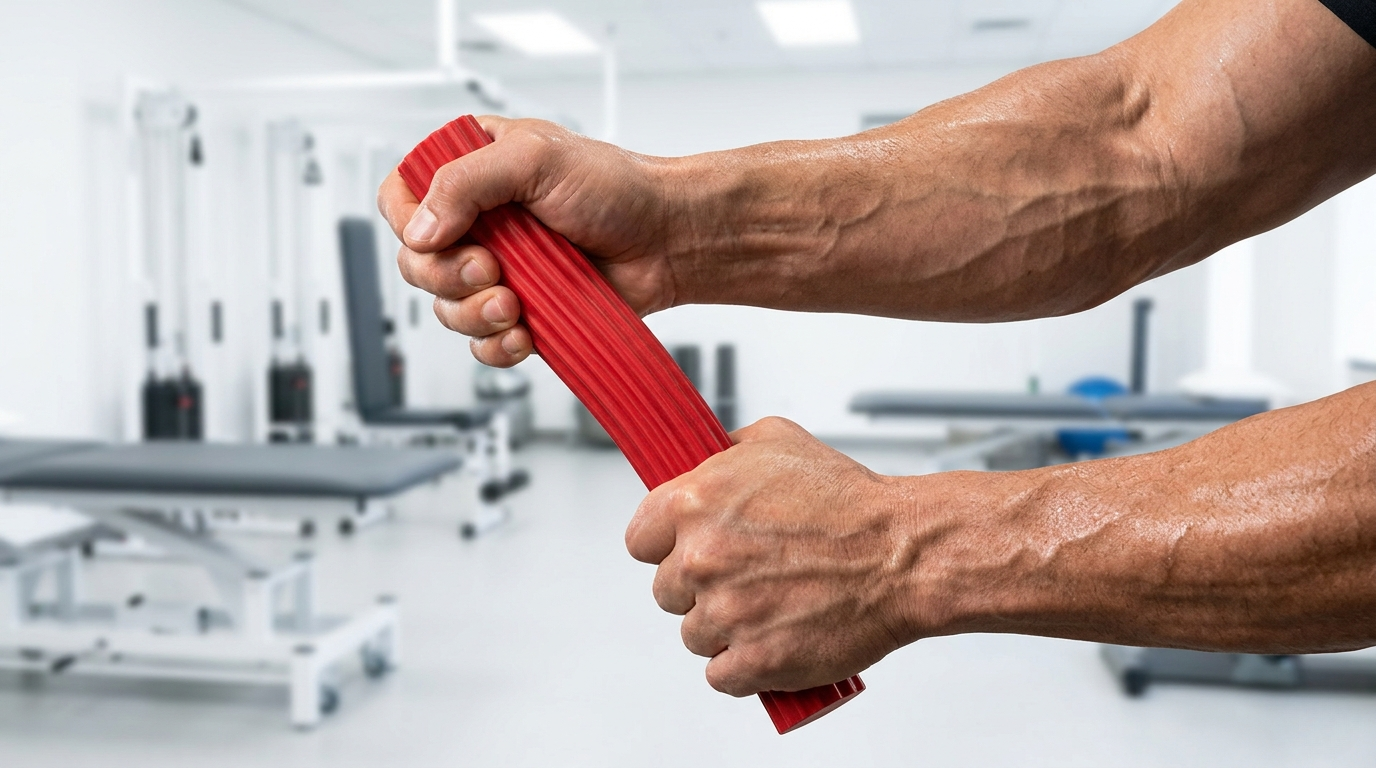
One of the most clinically validated and widely prescribed interventions for lateral epicondylitis is the “Tyler Twist” protocol, utilizing a flexible, color-coded rubber resistance cylinder known as a TheraBand FlexBar. Following its presentation at the 2009 American Orthopaedic Society for Sports Medicine’s Annual Meeting, this specific eccentric protocol has become the gold standard in non-operative tendon repair.
The Tyler Twist Execution Protocol:
- The patient holds the rubber bar vertically in the hand of the affected arm, with the elbow locked at the side and bent at a strict 90-degree angle. The wrist holding the bar must be fully extended (bent as far backward as possible).
- The non-affected hand reaches over and grasps the top segment of the rubber bar, acting as the stabilizing control.
- The non-affected hand powerfully twists the top of the bar forward (flexion), wringing it to create intense torsional resistance.
- Maintaining this severe twist, the patient extends both arms completely straight out in front of the body. At this point, the wrist on the injured side remains extended, while the uninjured wrist is flexed.
- The Critical Eccentric Phase: The patient slowly and deliberately releases the twist using only the affected wrist, fighting and resisting the aggressive torque of the rubber bar as the injured wrist is forced from extension into neutral flexion. This eccentric release phase must take exactly 4 seconds to complete to maximize time-under-tension.
Clinical trials dictate that performing this precise motion for 3 sets of 15 repetitions daily (with a 30-second rest between sets) results in complete resolution of symptoms for the vast majority of patients, typically within an average of 7 weeks and roughly 10 clinical visits. As strength increases, patients progress to thicker, more resistant colored bars.
Concentric and Isometric Forearm Fortification
In conjunction with the eccentric loading of the Tyler Twist, general strengthening of the complex forearm compartments is vital for long-term joint stability. Exercises such as targeted wrist curls enhance muscular endurance and structural integrity.
- Flexor Curls: With the palm facing upward, the player curls the weight up using only the wrist, pausing, and lowering it slowly.
- Extensor Curls: With the palm facing downward, the player lifts the weight upward, directly engaging the ECRB, and lowers it deliberately.
Furthermore, incorporating supinator and pronator curls fortifies the deep stabilizing muscles responsible for controlling complex paddle face angles during high-speed, unpredictable volleys. By holding an asymmetrical weight (such as a hammer or a paddle heavily weighted on one side) and slowly rotating the forearm from palm-up to palm-down, the player builds rotational resilience in the forearm. Additionally, comprehensive lower body conditioning—such as seated leg extensions to fortify the quadriceps and protect the knees from sudden pivoting injuries—ensures the kinetic chain remains intact.
Stroke Mechanics and Kinematic Adjustments
Rehabilitating the damaged tendon and upgrading to a technologically advanced paddle will only yield temporary relief if the underlying, flawed mechanical habits that initially caused the injury remain unaddressed. Players must actively reform their neuromuscular programming on the court.
Eliminating the “Leading Elbow” and Fostering Core Rotation
Biomechanical motion capture analyses of racquet sports have conclusively demonstrated that players suffering from lateral epicondylitis almost universally exhibit a dangerous “leading elbow” technique, particularly during backhand strokes. This occurs when the elbow extends far ahead of the torso during the swing plane, leaving the wrist and forearm completely isolated to generate the entirety of the stroke’s power, while the paddle face remains awkwardly open near the point of impact.
To neutralize this extreme risk, players must adopt stroke mechanics that initiate strictly from the ground up. Power should be generated by bending the knees, dynamically loading the hips, and powerfully rotating the torso. By the time the paddle makes contact with the ball, the arm should act primarily as a rigid, structural lever transferring the massive momentum generated by the core, rather than functioning as the frail, primary power source. Players are advised to avoid excessive wrist “flicking” and ensure that stroke power originates from the shoulder complex and trunk.
Grip Pressure Modulation and the Two-Handed Backhand Transition
As established, the “death grip” is a primary vector for vascular restriction and tendon strain. Players must consciously and relentlessly practice grip modulation. The player should maintain a loose, deeply relaxed grip (approximately a 3 or 4 out of 10 in terms of perceived tension) during the preparatory phase of the swing and throughout the backswing. The grip should only tighten reflexively at the exact microsecond of ball impact to stabilize the face, after which the hand must immediately relax again during the follow-through.
Furthermore, transitioning from a single-handed backhand to a two-handed backhand is arguably the most effective mechanical adjustment a player can make to preserve elbow health. Utilizing the non-dominant hand to stabilize the top of the paddle handle and drive the ball fundamentally alters the biomechanics of the stroke, literally halving the eccentric load and braking force placed on the dominant arm’s extensor tendons.
Advanced Clinical Interventions and Intelligent Load Management
When conservative measures—such as R.I.C.E. (Rest, Ice, Compression, Elevation), over-the-counter anti-inflammatories, and basic physical therapy—fail to resolve the tendinopathy after several weeks, patients must seek advanced medical intervention. Continuing to play through sharp pain does not build toughness; it exacerbates the micro-tearing and can induce chronic, degenerative tendinosis, significantly prolonging recovery from weeks to potentially years.
Orthotic Support and Compression Mechanics
During the delicate transitional phase of returning to active play, prophylactic support can heavily mitigate residual stress. Counterforce straps or braces (stiff bands clasped tightly around the upper forearm, roughly two inches below the elbow crease) function by mechanically altering the origin point of the extensor muscles. By aggressively compressing the muscle belly, the brace disperses the intense tension generated during a swing, redirecting the force into the band and preventing the full mechanical load from reaching the damaged lateral epicondyle.
Similarly, highly engineered compression sleeves improve localized hemodynamics throughout the entire arm. By applying graduated, medical-grade pressure, these sleeves enhance venous blood return, rapidly reduce exercise-induced edemas and swelling, and significantly increase proprioceptive feedback. This heightened spatial awareness stabilizes the joint neurologically and minimizes the impact of high-frequency vibrations before they can trigger pain receptors.
Advanced Clinical Modalities
If debilitating pain persists for longer than one month and interferes with daily grip function, orthopedic and sports medicine specialists deploy a range of aggressive therapeutic modalities to manipulate and accelerate tissue healing.
- Dry Needling: A highly effective technique utilizing thin, solid filiform stainless steel needles inserted directly into myofascial trigger points (tight bands of muscle) within the extensor compartment. This intervention targets excess buildups of the neurotransmitter acetylcholine, eliciting a localized twitch response that releases the knot, disrupts chronic muscle spasms, restores blood flow, and stimulates a localized healing response through controlled micro-trauma without the use of injected drugs like cortisone.
- Extracorporeal Shock Wave Therapy (ESWT) and Soft Tissue Mobilization: These therapies focus on physically breaking down pathological, inflexible scar tissue and aggressively stimulating angiogenesis (the formation of new, healthy blood vessels) within the notoriously avascular and slow-healing tendon origin.
- Biologics (PRP): In highly recalcitrant cases, Platelet-Rich Plasma (PRP) injections are increasingly utilized. This involves drawing the patient’s own blood, centrifuging it to isolate platelets, and injecting the highly concentrated platelet-derived growth factors directly into the lateral epicondyle, artificially upregulating the body’s natural tissue repair and bone healing mechanisms.
- Mill’s Manipulation: A manipulative technique performed by specialists involving the forced extension of the elbow with the wrist and fingers fixed and the forearm pronated, designed to reset the contractile elements of the joint, though it often requires a mandatory two-week rest period post-application.
Load Management and Periodization
Finally, long-term injury prevention in pickleball requires a structural, psychological shift in how older athletes manage their volume of play. The sport’s inherent accessibility, social draw, and seemingly low barrier to entry routinely obscure its true physiological toll. Sudden, enthusiastic spikes in playing frequency—such as transitioning from a largely sedentary lifestyle directly to playing high-intensity, competitive matches four to five days a week—instantaneously overwhelm the adaptive capacity of the tendons.
“Sitting is the new smoking, but jumping into unconditioned sporting activity is equally hazardous.” — Rob Neltner, Physical Therapist
Players must adopt professional principles of periodization, incorporating mandatory rest days into their weekly schedules and actively cross-training. Engaging in low-impact cardiovascular activities, swimming, stationary bicycling, or generalized resistance training on non-pickleball days ensures active recovery, flushes toxins from the muscles, and maintains overall systemic fitness without constantly hammering the elbow joints.
Conclusion
The rapidly escalating incidence of lateral epicondylitis among the millions of new pickleball practitioners is a complex, multifactorial epidemiological issue. It is deeply rooted in the unique biomechanical demands of the sport, the age-related physiological vulnerabilities of its primary demographic, and the widespread use of sub-optimal, high-impact equipment. As demonstrated by extensive national emergency department data and clinical surveys, the repetitive, high-frequency kinetic loads generated by the “death grip,” constant dinking, and arm-dominant swinging easily overwhelm the extensor tendons, leading to painful, chronic micro-tearing.
However, pickleball elbow is not an inevitability; it is largely preventable and highly treatable. By systematically altering equipment variables—specifically by adopting thicker, 14mm to 16mm core paddles constructed with advanced vibration-dampening face materials like Kevlar or hybrid carbon, and ensuring an exact, medically appropriate grip size through the ruler measurement method—players can drastically reduce the transmission of destructive shock to the elbow. Furthermore, the strict integration of clinical-grade dynamic warm-ups, the adoption of full-body kinetic chain mechanics (such as the two-handed backhand), and dedication to targeted eccentric strengthening protocols like the Tyler Twist, fortifies the entire musculoskeletal system against the unique, deceptive rigors of the sport. Ultimately, maintaining orthopedic health on the pickleball court requires a proactive, educated synthesis of advanced equipment technology, strict biomechanical discipline, and intelligent, periodized load management.