
The 5-Minute Pre-Match Warmup: A Routine Focused on Dynamic Stretching for the Calves, Shoulders, and Wrists
As pickleball’s popularity continues to skyrocket, so does the incidence of sports-related injuries among its players. The rapid, explosive nature of the game—characterized by sudden lateral movements, overhead smashes, and repetitive wrist flicks—places immense strain on the body. Clinical observations from sports medicine professionals indicate that common injuries on the court include Achilles tendon tears, calf strains, lateral epicondylitis (tennis elbow), and rotator cuff tendinitis.
To stay on the court and out of the physical therapist’s office, players must abandon the outdated habit of stepping straight from the car to the baseline. The key to injury prevention and immediate peak performance lies in a structured, five-minute dynamic warm-up.
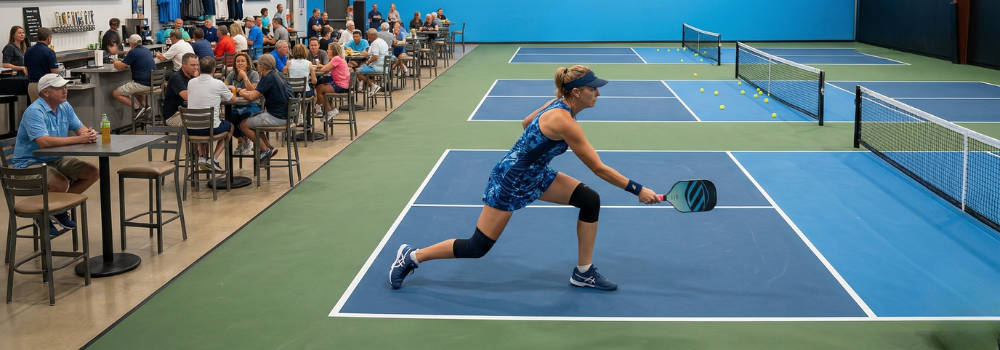
The Science of Dynamic vs. Static Stretching
For decades, athletes were taught to perform static stretches—holding a muscle under tension for 20 to 30 seconds—before playing. However, modern sports science has completely debunked this practice for pre-match preparation. Research has shown that static stretching prior to an activity does not decrease injury risk, and can actually lead to a temporary reduction in muscle strength, power, and functional performance.
Instead, a pre-match routine must utilize dynamic stretching. Dynamic stretching is “active stretching” that involves continuously moving parts of your body through a full range of motion to their end ranges without holding them in a static position. This active movement increases cardiovascular blood flow, elevates core body temperature, enhances muscle oxygen saturation, and actively lubricates the joints. Ultimately, a dynamic warm-up primes your central nervous system for the sudden changes of direction required in pickleball, making your muscles contract more efficiently and boosting agility.
Shielding the Calves and Achilles Tendon
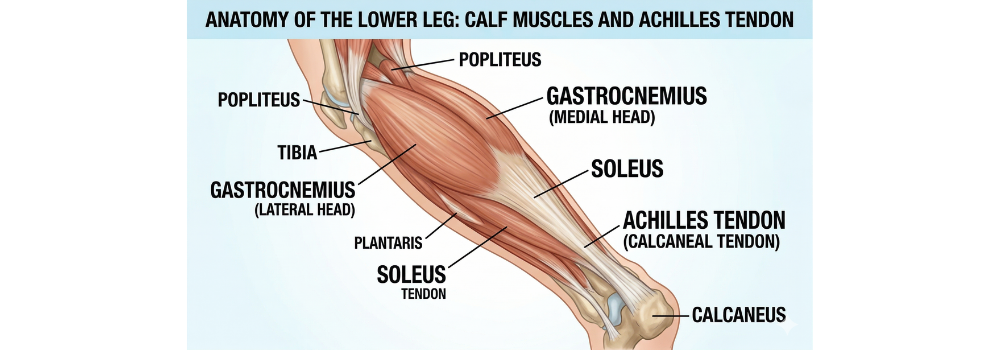
The lower extremities take a massive beating during a pickleball match. Your calf complex, made up of the larger gastrocnemius muscle and the deeper soleus muscle, acts as the primary shock absorber every time your foot strikes the hard court. Furthermore, Achilles tendon injuries frequently occur when players rapidly back pedal to track down a deep lob or third-shot drive.
To properly warm up the calves and Achilles, focus on these dynamic movements:
1. The Dynamic Rocking Calf Stretch
Unlike the traditional static wall stretch, the dynamic version requires constant motion. Stand facing a wall or a fence and place your hands on it for balance. Step one foot back, keeping the heel down and the knee straight. Instead of holding the stretch, gently shift your body weight forward and backward in a smooth, rocking motion. Perform 10 to 15 slow repetitions on each leg to elongate the muscles actively.
2. Dynamic Heel Raises
This movement specifically targets the Achilles tendon and the calf muscles, preparing them to bear your body weight during explosive jumps and split-steps. Stand with your feet hip-width apart and press up smoothly onto your tiptoes, then slowly lower your heels back to the ground. You can perform these standing in place or while slowly walking forward and backward across the baseline.
3. Airborne Ankle Circles
To ensure the ankle joint is fully lubricated, stand on one leg (hold your paddle or the fence for balance if necessary) and lift the opposite foot off the ground. Rotate your ankle in large, slow circles. Do 10 clockwise rotations and 10 counterclockwise rotations before switching feet.
Waking Up the Shoulders and Rotator Cuff
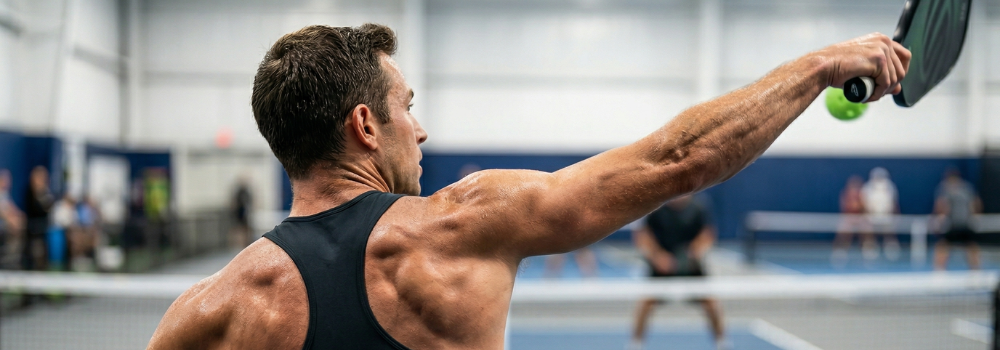
The shoulder is an incredibly complex joint heavily relied upon for dinking, driving, serving, and overhead smashing. Repetitive overhead movements can cause severe wear and tear on the four muscles that make up the rotator cuff, leading to pain and reduced range of motion. Warming up the shoulder complex ensures that your scapular stabilizers are engaged, giving you better control and more power.
1. Progressive Arm Circles
This is a foundational exercise for shoulder mobility. Stand with your feet shoulder-width apart and extend your arms straight out to your sides so your body forms a “T” shape. Begin making small, controlled forward circles. Gradually increase the diameter of the circles until you are making large sweeping motions. After 15 to 20 seconds, stop and repeat the exact same progression in reverse (backward circles).
2. Forward and Backward Shoulder Rolls
Stand with your arms relaxed by your sides. Shrug your shoulders up toward your ears, roll them forward, push them down, and squeeze them back in a continuous circular motion. Perform 10 to 15 rolls forward, then reverse the direction to open up your chest and loosen the upper back.
3. Resistance Band Pull-Aparts
If you carry a light resistance band in your pickleball bag, this is an elite warm-up move. Hold the band with both hands straight out in front of you, palms facing down. Keeping your arms straight, squeeze your shoulder blades together to pull your hands apart until the band touches your chest. Pause briefly, then slowly return to the starting position. Doing 10 to 15 reps of this will heavily activate the posterior shoulder muscles, balancing out the chest and preparing you for strong, stable swings.
Activating the Wrists and Forearms
Because pickleball features a lighter ball and paddle compared to tennis, players use significantly more wrist action to generate top-spin, slice, and quick kitchen-line volleys. Neglecting to warm up the wrists leaves you highly susceptible to lateral epicondylitis (tennis elbow) and general wrist strain.
1. Active Wrist Circles
Extend your arms straight out in front of you and make gentle fists. Rotate your wrists in slow, deliberate circles, moving them clockwise for 10 seconds and then counterclockwise for 10 seconds. This simple movement lubricates the joint capsule and prepares the tendons for rapid flexion and extension.
2. Hammer Rotations (Pronation and Supination)
This drill helps build resilience for the twisting motions required for heavy top-spin rolls and slices. Hold your paddle (or a light weight) by the handle, keeping your elbow tucked at your side and your forearm parallel to the ground. Slowly rotate your wrist so your palm faces up (supination), then rotate it so your palm faces down (pronation). Do 10 to 15 controlled rotations on each arm.
The 5-Minute Protocol Checklist
If you only have five minutes before the referee calls “zero-zero-two,” run through this rapid sequence:
- Minute 1: Light jogging or side shuffles across the baseline to elevate your heart rate.
- Minute 2: Progressive Arm Circles and Shoulder Rolls.
- Minute 3: Dynamic Rocking Calf Stretches and Heel Raises.
- Minute 4: Airborne Ankle Circles and Active Wrist Circles.
- Minute 5: Hammer Rotations with your paddle, followed by light, cooperative dinking at the kitchen line to sync your hand-eye coordination.
Investing just 300 seconds into your physical preparation will dramatically lower your risk of injury, improve your reaction time, and ensure you are playing your best pickleball from the very first serve.